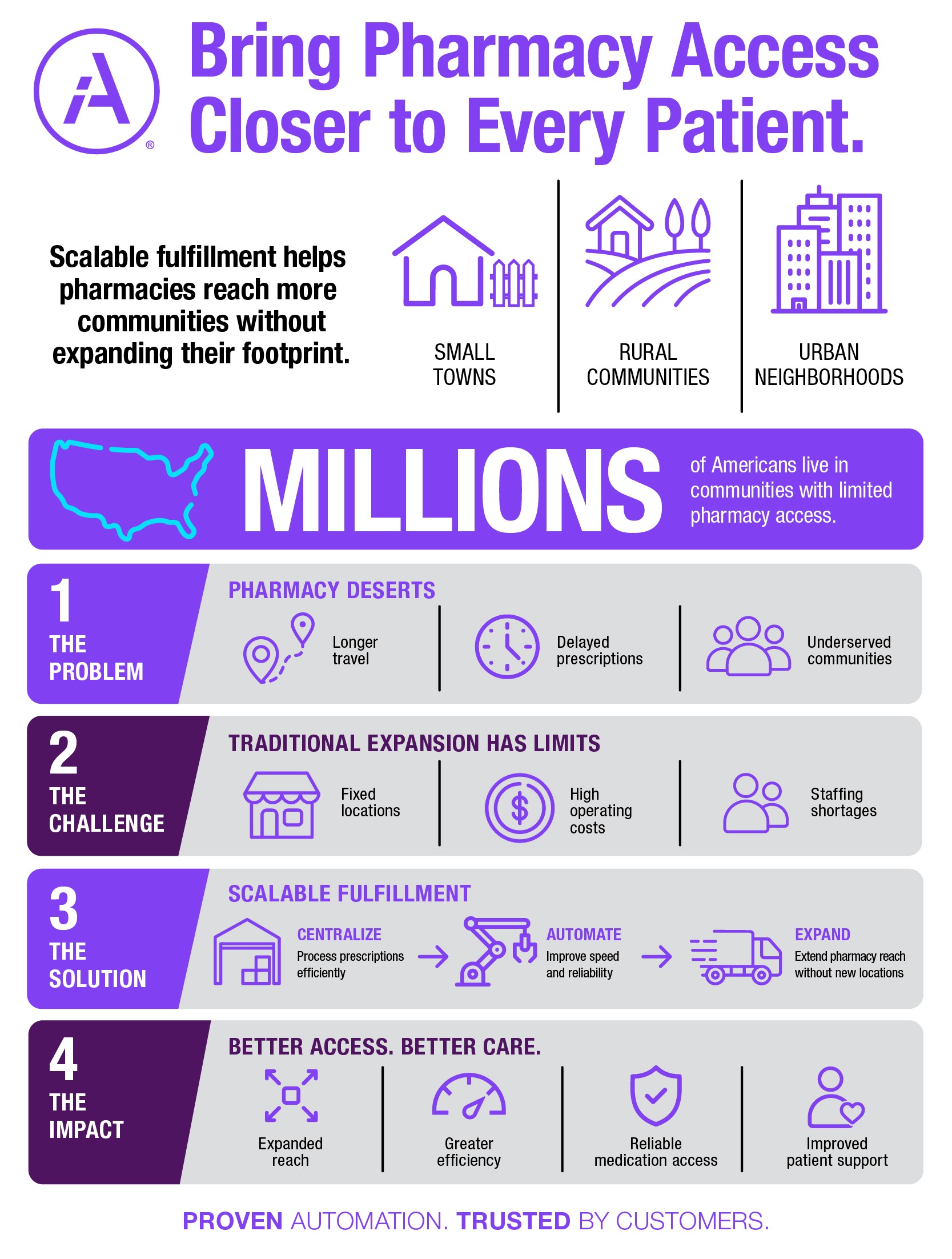
Millions of Americans across the United States live in communities without reliable access to essential pharmacy services. Often referred to as pharmacy deserts, these areas largely impact rural populations and underserved urban neighborhoods, forcing residents to travel long distances for prescriptions or go without critical medications altogether. As healthcare delivery evolves, scalable fulfillment models are emerging as a promising solution to slow, and even reverse, the spread of pharmacy deserts.
What Makes Fulfillment Models Scalable?
Scalable fulfillment centers aggregate prescriptions from multiple sources and process orders centrally, which can benefit smaller retail locations and telehealth providers. This centralized approach can improve operational efficiency, reduce overhead and accelerate turnaround times. By integrating advanced inventory management and automated dispensing technology, fulfillment models can reliably support a larger geographic footprint with fewer resources, which is better for the pharmacies and patients.
One of the biggest advantages of scalable fulfillment is its ability to enable remote delivery. Using coordinated delivery logistics, medications can be dispatched directly to patients’ homes. This is particularly critical in areas where local pharmacies are scarce or becoming nonexistent. By bridging the geographic gaps that define pharmacy deserts, fulfillment models bring healthcare to the patient—instead of forcing the patient to travel to care.
Scalable fulfillment systems also help pharmacies adapt to fluctuating demand. During peak times, such as the onset of a flu season, centralized processing supports the stability of supply and distribution channels. In pharmacy deserts, this reliability can mean the difference between consistent medication adherence and dangerous lapses in treatment.
While pharmacy deserts remain a complex challenge, scalable fulfillment offers a practical pathway to improved access. With the combination of smart technology, logistics and a patient-centered focus, the pharmacy industry can become more resilient and inclusive, and as a result, provide essential medications to every community across the U.S.
To learn more about the importance of scalability, download our whitepaper Built to Scale: Why Flexibility is Essential in Today’s Pharmacy